Monday, November 16, 2009

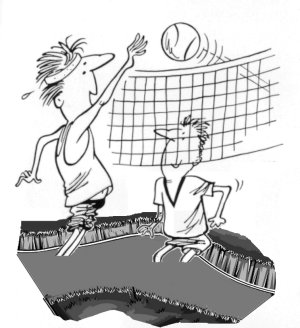
Anxiety and Volleyball


There are two different types of anxiety associated with sport - cognitive and somatic. Cognitive anxiety is the mental/negative component of stress related to performance such as worry. Somatic anxiety is the physical relation to sport performance such as an upset stomach, increased heart rate or tense muscles. Cognitive anxiety typically does not aid in better performance whereas somatic anxiety can depend on the athlete.

Factors that are associated with sport anxiety can be for a variety of reasons. The amount of pressure from a coach or teammate for individual success, the rivalry between certain teams, importance of a game such as a championship or the amount of experience a player has in the sport or even just on a certain team. A more experienced player will be able to control their somatic anxiety better than a non-experienced player.

Volleyball is a game of quick decisions and playing time with short periods of rest in between points that are scored. In between points there is a lot of time to think and mentally prepare for the next point unlike a lot of other sports. This is where cognitive anxiety can get in the way and stay in the way throughout the whole game. Negative self-talk is a problem that many athletes face prior to an event but in volleyball it can happen consistently throughout the entire match depending on how well the team is playing. These rest periods can also have a similar effect on somatic anxiety.

From experience I know that this is very true and anxiety in volleyball can be affected by so many things. Getting down during the game can cause stress levels between players to increase and it is so important to play each point as a new game. Having the time to think about previous plays and future plays can be detrimental to players who cannot control their anxiety levels. In a game like basketball, there is constant movement and plays where there is not as much time to reflect on the past. This makes volleyball and a lot of other net-wall games difficult mentally. It is hard but not impossible to avoid this stress and as a player becomes more experienced in game situations - anxiety will decrease on its own.

Monday, November 9, 2009

Ice and Heat Therapy


Many athletes or individuals who regularly exercise get confused on whether it is better to heat or ice before or after activity. Acute injuries such as a sprained ankle that has inflammation and swelling needs ice not heat. Applying heat to an acute or sudden injury will increase the temperature of the skin causing the swelling to worsen. Ice should be used to decrease the swelling due to the fact that it constricts the vessels. This causes the blood flow to slow down and internal bleeding to decrease in the area. This should be done a couple times a day when symptoms are present.

Chronic injuries should not be iced before activity. A chronic injury is an ongoing pain or ache due to muscle or joint soreness that happens over a period of time, usually from overuse. This is very common for volleyball athletes since certain positions on the court require repetitive practice throughout the season for mastery of the skill. This is true, especially for hitters, to have chronic injuries in the shoulder (rotator cuff), back, and knees. This is where heating before activity is highly recommended. It increases blood flow and allows the joint or muscle area to be more flexible by relaxing spasms or knots. Icing is recommended after activity for chronic injuries whereas heating is not.

Thursday, November 5, 2009

Trust Activities


As previously mentioned, volleyball is a sport that requires a great deal of team chemistry and communication. It is worth the time to bond with each other and learn to trust the players on the team. Without full trust, miss communication such as who should get a ball happens more often. There are a lot of different activities that can be done to build team trust.

One great activity is the trust fall. Everyone has a partner and one person is the catcher and one person falls into their arms being caught underneath the armpits. You should start with just this than gradually make it harder by walking and then falling backwards into the partner who follows. Also, falling from a box jump or something higher up into the entire team is a good trust fall but is a little more dangerous for risk of injury.

Another activity is called minefield. Once again, partners are used to walk through an area on the ground with obstacles (can be any objects for obstacles). One partner is blind folded while the other directs the partner through with words only from one end to the other without stepping on the "mine". This can also be more team oriented by having the entire team get 1 or 2 people through the minefield at a time.

There are plenty more activities that can be done but these are basic and traditional ways to build team trust. Does anyone have other suggestions that they feel really worked?